
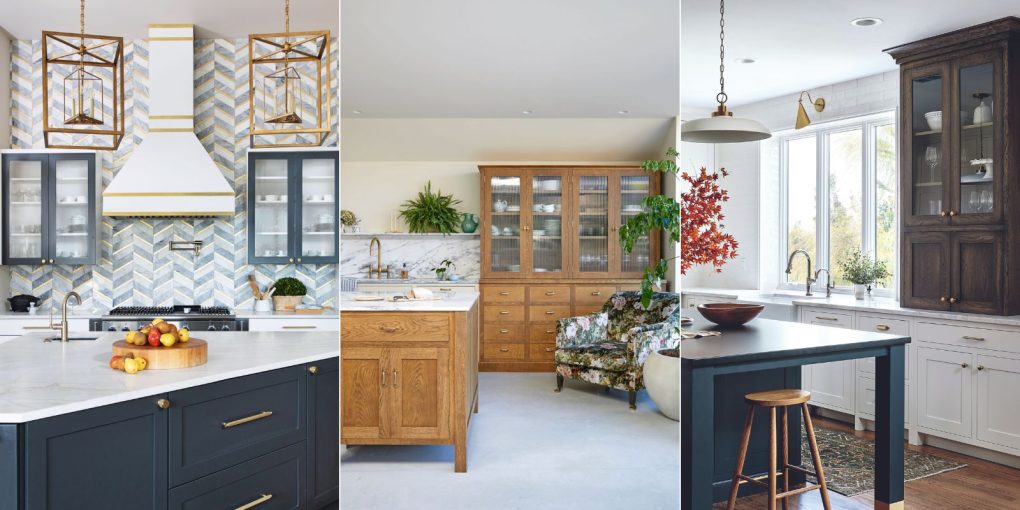
How Does Cabinet Refinishing Transform the Perception of an Outdated Kitchen Layout?
An outdated kitchen is not necessarily one with a poor floor plan. More often than not, it looks outdated. Outdated and worn cabinetry can cause a room to appear smaller, heavier, and less functional than it really is. For property managers, building owners, and anyone responsible for renovating residential spaces, the distinction is important.
Reconfiguring a space is expensive, messy, and not always necessary to change the way it feels. Cabinet refinishing can change how light passes through, how lines are read across the space, and how the space is read at first glance. It is not just a way to renovate and revitalize the space; it is a way to redefine the space as clean, open, and contemporary without ever moving one wall or changing the original footprint.
Surface Updates Shift Spatial Reading
- Visual Weight Changes Room Judgment
Cabinets are what tend to capture one’s attention in most kitchens. They occupy space at eye level, set the room’s boundaries, and convey the initial impression of age or youth long before one even considers flooring, appliances, or countertops. When cabinet finishes have been darkened by age, coated in a yellowing stain, or adorned with outmodish sheen levels, even a well-designed kitchen may feel like a box despite its practical dimensions.
In this way, a refinishing project can significantly alter one’s perception of a kitchen’s layout. While a kitchen may have a practical layout, suitable storage, and a logical work triangle, it may still appear cramped simply because the cabinets visually overwhelm the space. A refinishing project can relieve some of this visual overload, helping the architecture of the space shine through rather than feel burdened by its age.
- Finish Choice Reframes The Layout
This is one reason Cabinet Refinishing in Tampa often becomes part of broader value-oriented property updates. In many kitchens, the room is not structurally obsolete. It simply looks heavier and less efficient because the cabinetry drags attention toward age, color imbalance, and visual bulk. Once that finish layer is corrected, the layout often reads as more livable and more current, even before any other upgrades are introduced.
- Color Temperature Alters Perceived Openness
One of the most obvious ways a cabinet refinish changes a room’s layout is through color temperature. Warm oranges, grays, and dark glosses can all contribute to a sense of visual compression, especially in a room that receives limited natural light. Lighter, cleaner finishes, on the other hand, tend to reflect light well, define edges sharply, and create a sense of less crowded walls and spaces. What this means, again, is not a larger room per se, but a room that feels less burdened by its own presence.
The reason this is significant to a homeowner is that it is typically the first aspect of a room people notice. People looking to rent, buy, or occupy a given space do not walk into a kitchen and start analyzing it by its dimensions and layout. Instead, they respond to light, to balance, to the ease with which they can move into a given space. A cabinet refinish changes that initial reaction to a given room. A kitchen that once felt claustrophobic can begin to feel more open and better organized simply because the cabinets are no longer absorbing light and dominating the visual scene.
- Cleaner Lines Improve Layout Legibility
In older cabinet finishes, there is often a lack of visual clarity in a kitchen’s design. This is due to high grain contrast, edges, uneven stain absorption, and touch-ups, which make the kitchen’s design busier and harder to read. When there is too much visual noise in front of a cabinet, it becomes impossible to read a kitchen’s design. What is seen is age, wear, and disruption.
The act of refinishing a kitchen’s cabinets, however, makes it possible to reassess the kitchen’s design. A clear finish allows you to travel visually throughout a kitchen without getting caught up in visual inconsistencies. This, in turn, makes a big difference in a kitchen’s layout quality, though it is a very subtle effect. What is seen is a more orderly arrangement of cabinets, counters, and other openings in the kitchen, which is perceived as a better layout. However, nothing in the kitchen’s design or cabinet box sizes has changed.
- Contrast Can Define Better Proportions
Not all successful refinishing jobs involve making the cabinets lighter. There are times when the best approach in a kitchen involves contrast, and that contrast needs to be implemented with more discipline. The idea here is not about brightness level. The idea is about proportion. When the cabinets’ color and level are well-calibrated to the space, the kitchen feels better proportioned.
This is particularly true for larger kitchens with awkwardly distributed space. There may be a lot of space in a kitchen, but the layout may not feel well distributed if the cabinets overwhelm one section and disappear from another. Refinishing the space can help equalize the layout, so the cabinets start to reinforce it rather than work against it.
This can be achieved with the right level of color and finish, so the cabinets become a better-proportioned part of the space rather than an unbalanced one.
- Light Reflection Changes Depth Perception
It not only influences color but also affects light. A bad finish can make a space appear flat or cause light to take on an uneven quality. This can make a space appear old instead of deep. A refinish allows property management to choose a finish level that works well with a room’s lighting conditions. This may mean reducing glare, dullness, or even achieving a more even look in a kitchen.
It even influences the depth of a space. In a kitchen with limited light, a balanced finish can make tall cabinets appear less overwhelming or corners appear less in shadow. In a well-lit kitchen, a well-controlled finish can prevent a space from appearing too shiny or harsh. Both are important because people tend to judge a space’s quality by its visibility. A space that’s easy to read, not too shadowy, can be a space that’s easy to use.
Layout Perception Often Starts At The Cabinets
Cabinet refinishing is not just about changing the color. It is about changing the way the room is understood. And for property managers and building owners, that is what it is really all about. A room that may have seemed old, cramped, and disorganized may begin to feel fresh, spacious, and well-designed as the cabinetry stops fighting the space. As a matter of fact, in many rooms, the space itself does not need to be rearranged to feel improved. It needs to feel like the dominant surface in the room has stopped telling the world how old it is. And when that happens, the entire room is easier to see, easier to market, and easier to appreciate for what it is.